
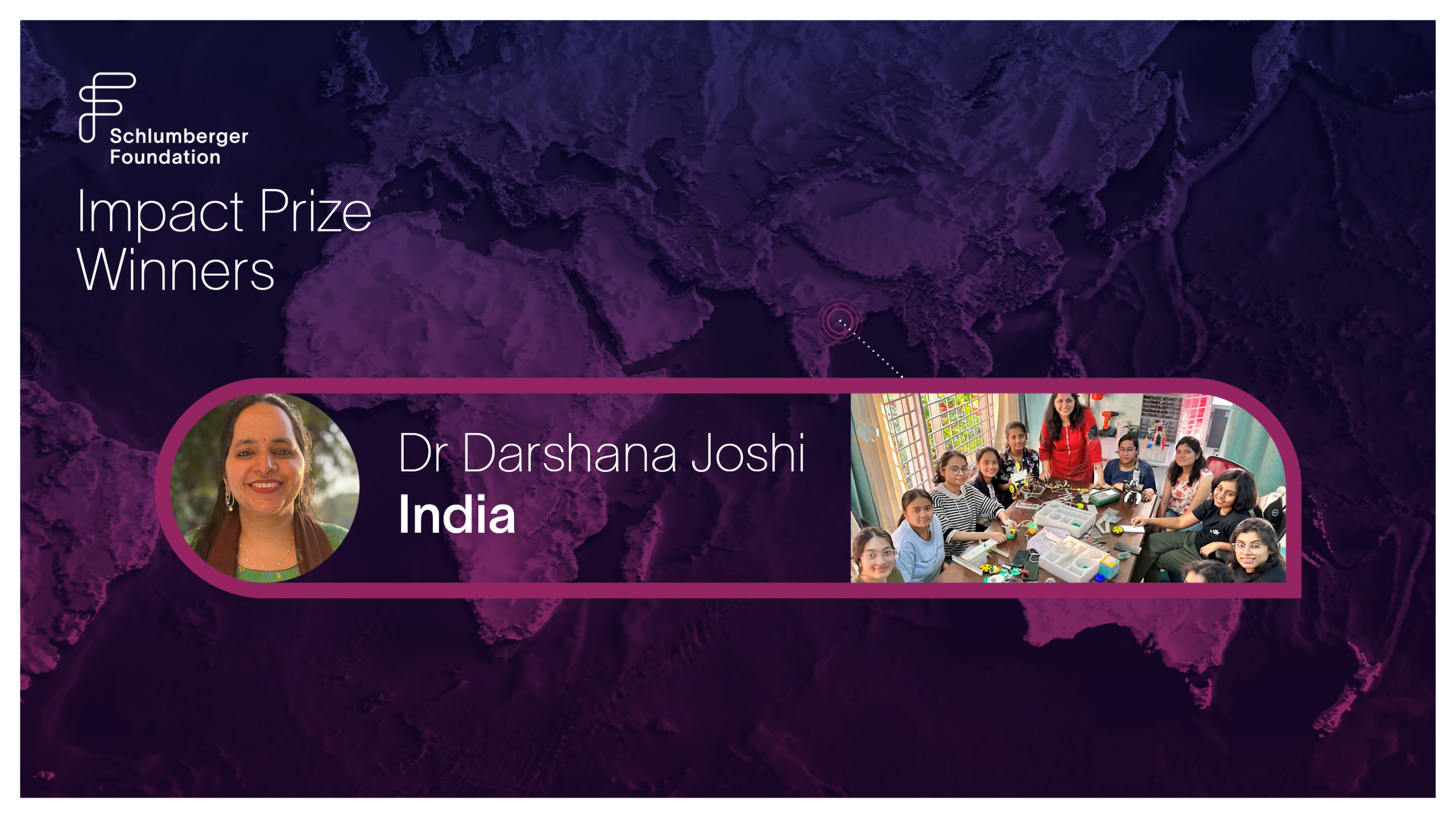
How Darshana Joshi Is Rewriting Who Gets to Dream in Science, Technology, Engineering, and Mathematics.
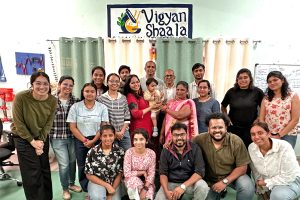
Born in a remote Himalayan farming community in the District of Almora in Uttarakhand, Dr. Darshana Joshi learned early that ambition can falter simply because it has no one to echo it back. It needs opportunity, encouragement, and people who believe in your potential before you can fully believe in it yourself. A scholarship from a Delhi-based NGO Udayan Care and a fortuitous pairing with persistent mentors — Dr. Vikram Dutt and Professor Shobhana Narasimhan — changed the trajectory of her life. Together, they turned a girl who was the first in her family to attend university into a scientist, opening doors to possibilities that had once seemed impossibly distant. Years later, together with her husband and fellow physicist Dr. Vijay Venugopalan, she co-founded VigyanShaala, an organization connecting otherwise sidelined young men and women with role models and opportunities in Science, Technology, Engineering and Mathematics.
“It wasn’t only that Shobhana taught me physics,” Darshana says about Professor Shobhana. “She taught me that I belonged in that room, that my views and voice matter and above all that I can make a difference.” That conviction, she explains, drove VigyanShaala’s mission: to make STEM education, skilling, and professions accessible to the most marginalized young men and women across the globe, by giving them access to mentors, internships and hands-on projects that make a scientific career imaginable and attainable. A mission which when achieved, would plug the massive gap between talent and opportunity amongst these communities.
According to UNESCO data, women in India make up 43% of STEM graduates, among the highest shares globally, yet only 27% enter the STEM workforce, and a 2023 UNESCO report puts Research & Development (R&D) representation at just 18%. The story repeats along caste and geography lines. Furthermore, an India Institute of Management (IIM) Udaipur analysis of All India Survey on Higher Education (AISHE) data shows Scheduled Castes, Scheduled Tribes and Other Backward Classes students, now form a 60.8% majority of higher-education enrolment. Unfortunately, however, that access hasn’t translated into proportional employment, especially for the 70% of India that lives outside its cities. That gap, Darshana argues, is where talent quietly disappears.
Started in 2015 as a volunteer group — with Darshana completing her PhD at Cambridge and Vijay his Marie Curie Fellowship at Politecnico di Milano in Italy — VigyanShaala was built on a shared conviction that the problem was not talent but connection. Before starting a single program, the two spent the first years of VigyanShaala’s formal existence in 2019 and 2020 visiting 500+ schools and 60+ colleges across 8 Indian states, to understand what actually stood between a young woman in an Indian village and a career in science. That data-first discipline shaped everything that followed.
VigyanShaala recruits volunteer scientists, researchers, and industry professionals and pairs them with students from small towns and villages for year-long mentorships, virtual lab visits, and project guidance. Beyond technical skills, mentors provide the soft scaffolding these students rarely receive in communities where traditional expectations narrow horizons: confidence, networks, and permission to imagine differently.
That scaffolding shows up clearly in the story of Diksha, one of VigyanShaala’s earliest mentees. Raised in Pthoragarh (district bordering Nepal), she spent afternoons watching the mountains change with the seasons and developed a curiosity about ecosystems. Through VigyanShaala, she met Dr. Hemant Tripathi, a scientist at UNEP-WCMC in Cambridge, who widened her ambitions. With his support, she secured a year-long internship with a London-based think tank on climate-smart agriculture, working with scientists across the USA, UK, and Africa. Today Diksha has completed her postgraduate in ecology from one of India’s leading institutions and contributes to international research projects a leap that began with a video call and a stranger’s belief in her potential.
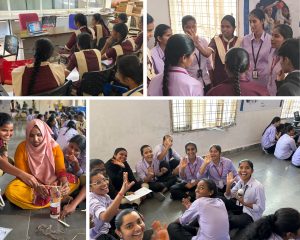
What sets VigyanShaala apart is its insistence that mentorship be sustained and practical. The model runs across three pillars: Kalpana, She for STEM, reimagining who gets access to science; the Rural STEM Champions Fellowship, building hands-on technical skills and innovation capacity in India’s most remote communities; and Advocacy and Education Policy Research, pushing practice-informed policy for systemic change beyond the classroom. The Rural STEM Champions Fellowship places this conviction in the landscape itself. Science and Innovation Labs established inside government degree colleges across Uttarakhand’s Himalayan hill districts give fellows like Kavya from Pithoragarh access to research equipment, global mentors, and a two-plus-two-year scholarship — within walking distance of home. Fellows build frugal innovations for local challenges: water quality monitoring, medicinal plant documentation, disaster-resilient construction. Each fellow then runs hands-on science sessions for school students in surrounding villages, creating a multiplier effect that turns a single lab into a community resource.
Students across all programmes don’t just attend inspirational talks. They co-author research projects, present findings to scientists, and apply for internships that place them in laboratories and policy teams. Those experiences create a feedback loop: students gain confidence and credentials, mentors see tangible outcomes, and communities begin to accept new narratives about what girls can become.
VigyanShaala’s growing presence has not gone unnoticed by government. In Telangana, formal partnerships with the state’s Tribal, Social, and Backward Classes Welfare Residential Educational Institutions have embedded Kalpana, She for STEM as a co-curricular programme inside welfare residential colleges, reaching over 6,000 students. In Uttarakhand, in February 2026, the Chief Minister announced state-wide expansion of She for STEM to all 13 districts, with direct government scholarships for top fellows — a signal that the model has cleared institutional scrutiny and is ready for replication at state scale.
Alongside its human mentorship infrastructure, VigyanShaala has built Curie, its AI mentor, to carry personalized career guidance to students that even its 1,000-strong volunteer network cannot reach. Delivered over WhatsApp in multiple Indian languages, Curie provides contextual career conversations, course recommendations, and application support at near-zero marginal cost, designed specifically for low-bandwidth phones and first-generation learners. Backed by the Meta Pragati AI for Impact grant, Curie is VigyanShaala’s answer to the question every mentor-based organization must eventually face: how do you scale the human parts of what you do?
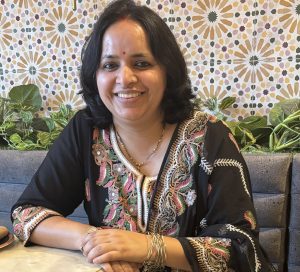
Darshana measures success in both data and destiny. VigyanShaala has reached 40,000+ students and 500+ teachers across 28 states and 330+ districts, engaging over 20,000 women undergraduates and facilitating 900,000+ mentoring hours. By 2030, the organization aims to reach one million young people in STEM. But the real metric, she says, is the sight of former mentees returning as mentors.
“I hope one day I’ll be working in a company founded by one of my students,” she laughs, and the idea is not fanciful.
VigyanShaala’s alumni are already entering graduate programmes, research institutions and startups. Some have begun mentoring the next cohort, creating the compounding effect Darshana wants.
This year the Schlumberger Foundation recognized Darshana’s work with the Faculty for the Future Impact Prize. As a Faculty for the Future alumna herself, the recognition carries special significance, reflecting both her personal journey and the impact of the organization she co-founded. The award not only validates VigyanShaala’s model but also provides resources to scale its reach and deepen its impact. Darshana says the prize feels like a hand extended not just to her but to the network of mentors and students who have already begun to rewrite expectations in their communities. The funding will strengthen technical capacity, expand mentorship programmes and build infrastructure to sustain longer-term fellowships and research placements.
For Darshana, the prize is also personal. It’s a way to give forward the single gift that altered her life. “Every opportunity I’ve had can be traced back to my mentor’s belief,” she says, and now she wants that belief to be a replicable system rather than a lucky exception. The Schlumberger Foundation’s recognition amplifies that possibility, turning one mentor’s faith into institutional momentum. If the past decade is any guide, VigyanShaala’s ripple effects are set to travel beyond academic credentials. Students like Diksha are already applying scientific methods to local problems. From climate resilient farming to water management, bringing research home to communities that most need it. In doing so, VigyanShaala is not only creating scientists, but cultivating civic leaders who carry with them the humility of origin and the tools to transform it.
Darshana’s story begins with being seen; the movement she has started is about teaching others to see. With the Impact Prize, those sightings will reach more villages, more classrooms and more bedrooms where girls once slept without imagining a lab bench as a possibility. The mentors she never had are now multiplying, and their work promises to change who gets to dream, and who gets to be believed.